How Social Listening and Data Analytics Reveal Hidden Market Trends: Lessons

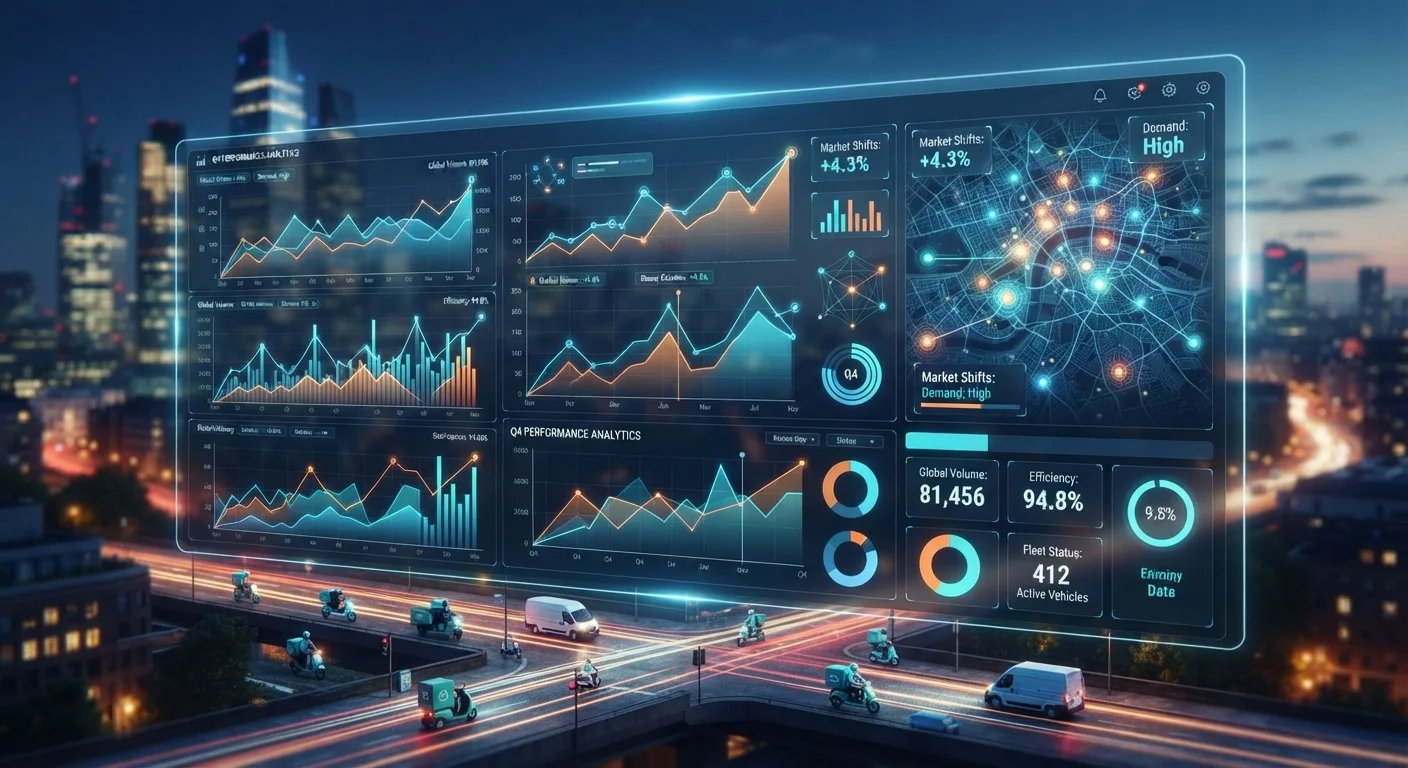
Market trends are collective consumer behaviors that shift over time, and
How Social Listening and Data Analytics Reveal Hidden Market Trends: Lessons from the Food Delivery Boom
Introduction: The Hidden Logic of Market Trends
Market trends are collective consumer behaviors that evolve over time, often lying just beneath the surface of public visibility. The challenge for businesses is that these shifts rarely announce themselves with fanfare. Instead, they build slowly—a whisper here, a slight uptick there—until they reach a critical mass that transforms entire industries. By that point, the window for early action has already closed. The ability to detect these trends before they become obvious is not merely an advantage; it is increasingly a prerequisite for survival.
The food delivery industry during the COVID-19 pandemic offers one of the most striking examples of this dynamic. In the span of three months, between March and May 2020, the sector quadrupled in size. Restaurants that recognized this shift early and partnered with platforms like DoorDash, UberEats, and Instacart managed to keep their doors open. Those that hesitated—waiting for confirmation from traditional market reports or their own declining foot traffic—faced layoffs, permanent closures, and irreversible losses. This article examines how social listening and data analytics empower businesses to spot such hidden trends, using the food delivery boom as a case study, and explores the lasting structural changes that followed.
[IMAGE: A simple infographic showing a trend curve with a red "detection zone" early on vs a later "obvious zone".]
The Food Delivery Explosion: A Case Study in Early Detection
When the World Health Organization declared COVID-19 a global pandemic in March 2020, governments around the world imposed lockdowns, forcing millions to stay home. Restaurants, which had previously relied on dine-in customers, faced an existential threat overnight. Yet within weeks, a new pattern emerged: consumers were turning to delivery services at an unprecedented rate. According to industry data, the food delivery market expanded roughly fourfold between March and May 2020, a trajectory that would have taken years under normal conditions.
Early adopters among restaurant owners did not wait for official statistics to confirm the shift. They tracked real-time signals: spikes in social media mentions of “contactless delivery,” surges in search queries for “food delivery near me,” and sudden drops in foot traffic data. By connecting the dots, they recognized that demand was shifting permanently—at least for the duration of the pandemic. These businesses swiftly enlisted with major delivery platforms, adjusted their menus for takeout and delivery, and retrained staff for curbside pickup. As a result, many maintained operations, some even thrived, while competitors who delayed saw their revenues collapse.
The contrast was stark. A March 2020 survey by the National Restaurant Association found that nearly one in three restaurants had already pivoted to delivery or takeout within the first two weeks of lockdowns. By June, early adopters reported an average revenue decline of only 20% compared to pre-pandemic levels, while late adopters—those who started delivery partnerships in May or June—saw declines of 50% or more. Hundreds of independent restaurants that lacked the agility to pivot never reopened.
The post-pandemic landscape further validated the permanence of this shift. Delivery-based startups like ghost kitchen operators, cloud restaurant aggregators, and specialized last-mile logistics companies proliferated. Even as dine-in dining resumed, consumer habits had changed: a 2021 study found that 60% of delivery users continued ordering at the same frequency after restrictions lifted. The trend was not a temporary blip—it was a structural transformation.
[IMAGE: A bar chart comparing early adopters' revenue vs late adopters' losses during March–May 2020.]
How Social Listening and Data Analytics Power Trend Detection
How did early adopters see the trend before it was obvious? The answer lies in two interconnected capabilities: social listening and data analytics.
Social listening involves monitoring online conversations in real time—across social media platforms, review sites, forums, news articles, and search queries—to capture unfiltered consumer sentiment. Unlike traditional surveys or focus groups, which are slow and retrospective, social listening provides a live feed of what people are saying, asking, and complaining about. When combined with advanced analytics, this raw data becomes a predictive tool.
Consider a hypothetical restaurant chain headquartered in a region that had not yet experienced widespread lockdowns in February 2020. Traditional market research, reliant on historical sales data and economic forecasts, would have offered little indication of the coming disruption. However, a social listening dashboard tuned to relevant keywords—"delivery," "takeout," "safe eating," "stay at home"—would have detected a sharp upward trend in mentions originating from regions already under lockdown, such as Wuhan, Italy, and Seattle. Sentiment analysis would have revealed growing anxiety about dining in public spaces. Even local search queries for "restaurants that deliver" might have started climbing weeks before official restrictions hit.
These signals, when aggregated and analyzed, turn into actionable intelligence. The restaurant chain could have pre-negotiated delivery partnerships, adjusted supply ordering, and trained staff for a delivery-first model—all before the lockdown orders were announced. That is the power of real-time data: it collapses reaction time from weeks to days.
Social listening also helps identify subtler shifts in consumer behavior that traditional metrics miss. For instance, during the early pandemic, terms like "curbside pickup" and "no-contact drop-off" saw explosive growth in search volume. Brands that picked up on these micro-trends were able to communicate safety protocols and build trust with customers before competitors did. Similarly, data analytics can cross-reference social media volume with location data, purchase patterns, and weather to isolate emerging demand clusters.
[IMAGE: A screenshot-style mockup of a social listening dashboard showing keyword trends and sentiment analysis.]
Long-Term Structural Impact: Beyond the Pandemic Boom
The food delivery boom did not end when lockdowns eased; it reshaped the foundations of the restaurant industry and beyond. Understanding these long-term changes is critical for businesses looking to navigate future disruptions.
First, the rise of ghost kitchens—delivery-only food preparation facilities with no dine-in space—became a permanent fixture. Companies like CloudKitchens and Reef Technology invested billions in real estate for these units, recognizing that the cost structure of a traditional restaurant (rent, servers, dishwashers, front-of-house decor) no longer made sense in a delivery-dominated world. By 2023, ghost kitchens accounted for an estimated 15% of all off-premise food orders in the United States, up from near-zero in 2019.
Second, supply chains were forced to adapt. The surge in delivery demand required massive increases in packaging materials, insulated bags, and single-use containers. Manufacturers of these items struggled to keep up, leading to shortages and price increases. Logistics providers invested heavily in route optimization software and last-mile delivery networks, often leveraging AI to predict order volumes and optimize driver assignments. Some restaurants began sourcing directly from local farms and producers to shorten supply lines, a trend that analytics data revealed through increased mentions of "farm-to-table delivery."
Third, restaurant real estate underwent a paradigm shift. The need for large dining rooms diminished; instead, properties with small footprints in high-density residential zones became more valuable. Leases were renegotiated, and many landlords began converting former restaurant spaces into dark stores—micro-warehouses used for rapid order fulfillment. Social listening data from real estate forums and business news sources picked up this shift early, signaling opportunities for investors who understood the structural change.
Fourth, consumer habits evolved beyond food. The convenience of ordering via apps extended to groceries, alcohol, pharmaceuticals, and even pet supplies. This "delivery everything" mindset created new market categories and disrupted established retail models. Brands that tracked this cross-category trend through analytics were able to diversify their offerings and capture adjacent revenue streams.
Finally, the workforce changed. Delivery drivers became a core part of the gig economy, with platforms competing for labor through incentives and dynamic pricing. Meanwhile, restaurant kitchens reorganized around online order workflows, integrating tablets, order management systems, and kitchen display screens. Analytics of driver turnover and customer wait times became essential operational levers.
[IMAGE: A diagram showing the evolution from traditional restaurant to ghost kitchen, dark store, and last-mile logistics network.]
Practical Frameworks for Integrating Social Listening into Trend Detection
The lessons from the food delivery boom are not limited to the pandemic. Any business can adopt a systematic approach to trend detection using social listening and data analytics. Here is a practical framework:
1. Define your signal universe. Identify the key sources of early signals relevant to your industry: social media platforms (Twitter, Reddit, TikTok, Instagram), review sites (Yelp, Google Reviews), search query trends (Google Trends, Ahrefs), industry news, and consumer forums. For a restaurant, this includes food blogs, health department alerts, and local community Facebook groups.
2. Establish baseline metrics. Before a trend emerges, you need to know what "normal" looks like. Track volume of mentions, sentiment scores, and keyword frequency over time. This baseline enables you to detect anomalous spikes early.
3. Monitor leading indicators, not lagging ones. Lagging indicators include quarterly sales reports, foot traffic counts, and customer satisfaction surveys. Leading indicators include search queries, social media mentions, app download rates, and competitor service changes. Shift your dashboard to emphasize the latter.
4. Set up automated alerts. Use social listening tools (such as Brandwatch, Sprout Social, or Talkwalker) to trigger alerts when a keyword or combination of keywords surpasses a threshold. For example, a 200% week-over-week increase in mentions of "delivery delay" could signal a service problem that might impact your reputation.
5. Correlate qualitative and quantitative data. A spike in social media chatter about "ghost kitchens" does not alone constitute a market trend. Cross-reference it with quantitative data: are restaurant permit applications for kitchen-only facilities rising? Are logistics real estate prices climbing? Integration of multiple data streams validates the trend.
6. Run scenario planning. Once a potential trend is detected, model its impact on your business under different scenarios (e.g., rapid adoption vs. slow uptake). This prepares leadership to act decisively when the signal becomes clear.
7. Build an internal culture of data responsiveness. Tools are useless without organizational willingness to act. Foster cross-functional teams that meet regularly to review trend indicators and push recommendations to decision-makers.
[IMAGE: A flowchart illustrating the seven-step framework: Define signals → Establish baseline → Monitor leading indicators → Set alerts → Correlate data → Scenario plan → Build culture.]
Conclusion: The New Imperative of Real-Time Data Intelligence
The food delivery boom was not an isolated anomaly. It was a preview of how quickly consumer behavior can shift when catalyzed by external shocks—and how costly it is to remain blind to those shifts. Social listening and data analytics are no longer optional tools for market researchers; they are essential components of any competitive strategy.
Businesses that invest in real-time data intelligence gain the ability to see around corners. They can spot the early signs of a trend—whether it is the rise of plant-based meat substitutes, the demand for sustainable packaging, or the next surge in delivery consumption—and pivot accordingly. Those that rely solely on traditional, backward-looking data will inevitably find themselves reacting to trends that have already peaked.
The lesson is clear: market trends are not random; they are the collective behavior of millions of consumers, leaving digital traces everywhere. The question is not whether these traces exist, but whether your organization has the tools and the mindset to read them in time.
---
Keywords: social listening, data analytics, market trends, food delivery, COVID-19, consumer behavior, competitive advantage, supply chain
Forward-Looking Content Notice
Coverage of emerging technology, business evolution and future society may include forward-looking scenarios. Technologies, claims and forecasts can change quickly, and the material is not investment or professional advice.