US Tech Leadership Hangs in the Balance: Belfer Center’s 2025 Critical & Emerging

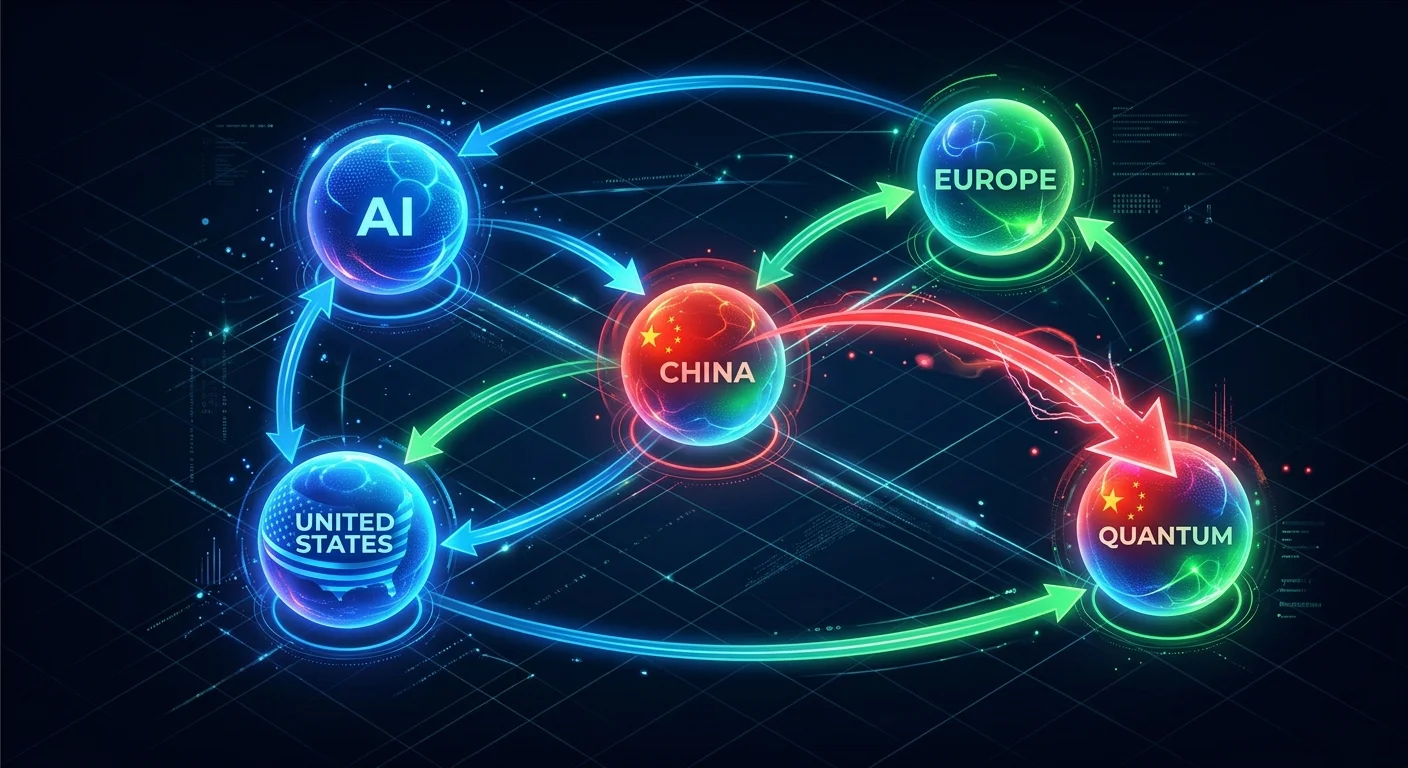
The Belfer Center’s June 2025 Critical and Emerging Technologies Index shows
US Tech Leadership Hangs in the Balance: Belfer Center’s 2025 Critical & Emerging Technologies Index Reveals Fragile Dominance Amid China’s Rapid Catch-Up
Introduction: The Index That Redefines Tech Power
On June 5, 2025, the Belfer Center for Science and International Affairs at the Harvard Kennedy School released its latest Critical and Emerging Technologies Index, a comprehensive assessment of 25 countries across five technology sectors—artificial intelligence, biotechnology, semiconductors, space, and quantum computing. Drawing from thousands of public and commercial data points, the report delivers a nuanced verdict: the United States still leads in every sector, but the margin of that leadership is far narrower than most headlines suggest.
“News headlines often make sweeping claims about which country is winning the technology race, yet it is difficult to find robust, cross-sector data that supports such generalizations,” the report notes. This 2025 edition fills that gap with granular metrics, revealing a global tech order that is simultaneously U.S.-dominant and deeply fragile. The core insight is sobering: American preeminence is powered by economic resources, world-class research institutions, and human capital, but China’s state-backed manufacturing prowess and breakneck pace of AI model releases are eroding those advantages sector by sector. Europe holds a solid third place but lags critically in space and semiconductors.
[IMAGE: World map heatmap highlighting US, China, and Europe with technology sector scores.]
---
The AI Arms Race: Vulnerability Exposed by DeepSeek and Alibaba
The United States retains its lead in advanced AI, but the gap is narrowing faster than many anticipated. The 2025 index highlights two Chinese models—DeepSeek R1 and Alibaba’s Qwen3, both released this year—as direct challenges to American dominance. These models achieve performance levels that rival or approach leading U.S. systems, demonstrating that China’s AI ecosystem has leapfrogged earlier constraints on computing power and data access.
Export controls imposed by Washington remain a significant obstacle for Beijing, particularly in restricting access to high-end semiconductors. Yet the Belfer Center’s data shows that the AI leadership race is not a two-player game. Europe, with its strong data-privacy frameworks and deep pools of human capital, has carved out unique advantages in responsible AI development and specialized applications. The report warns: “The United States has a considerable advantage in the field of AI, but China and Europe have unique advantages that will challenge American AI lead in the next decade.”
The implication is clear: AI leadership is no longer a birthright. It depends on sustained innovation, strategic investment, and effective collaboration with allied nations. DeepSeek and Alibaba have exposed a vulnerability that no amount of export controls alone can seal.
[IMAGE: Timeline showing release of DeepSeek R1 and Alibaba Qwen3 alongside US AI milestones.]
---
Biotechnology: The Narrowest Gap – Where China Could Overtake First
Among all five sectors, biotechnology shows the smallest performance differential between the United States and China—a finding that the report calls “the most immediate opportunity for China to overtake.” The index reveals a stark asymmetry: the United States leads overwhelmingly in early-stage research, drug discovery, and the broader innovation ecosystem, but China already dominates pharmaceutical production through massive state-backed manufacturing capacity.
This gap in manufacturing is critical. While American biotech breakthroughs emerge from universities and venture-funded startups, China can scale those discoveries into high-volume, low-cost production far more quickly. The report’s data points to a widening chasm in supply chain resilience: the U.S. relies on imported active pharmaceutical ingredients (APIs) and generic drug components, much of which comes from China. In a crisis—pandemic, geopolitical disruption, or trade war—that dependency becomes a strategic vulnerability.
The narrowest competitive edge in biotechnology means that even a modest shift in R&D investment or talent flow could tip the balance. For now, the United States holds the lead, but the margin is razor-thin, and China’s manufacturing advantage grows larger every year.
[IMAGE: Side-by-side bar chart comparing US vs China in biotech R&D spending and pharmaceutical production output.]
---
Semiconductors: Fragmented Leadership and the Supply Chain Paradox
No single nation controls an entire advanced semiconductor supply chain—and that is perhaps the most important structural reality of the 2025 index. The United States retains leadership in chip design, electronic design automation (EDA) tools, and cutting-edge logic (sub-3nm nodes). But Taiwan’s TSMC and South Korea’s Samsung dominate fabrication, while the Netherlands’ ASML holds a near-monopoly on extreme ultraviolet (EUV) lithography equipment.
China, despite heavy state subsidies and years of investment in domestic champions like SMIC, still trails in both design and manufacturing of advanced chips. However, the report notes that China is closing the gap in mature-node chips (28nm and above), which are essential for automotive, industrial, and consumer electronics applications. Export controls have slowed but not halted China’s progress; instead, they have accelerated indigenous innovation efforts.
The U.S. strength in this sector is sustained by public-private partnerships—such as the CHIPS Act investments—and by strategic alliances with Europe, Japan, and South Korea. Yet the index underscores a paradox: the very fragmentation that gives the U.S. a design lead also creates systemic risk. A disruption in Taiwan, a geopolitical crisis in South Korea, or a technology leak from an ally could unravel the entire architecture.
[IMAGE: Flowchart showing semiconductor supply chain nodes: design (US), fabrication (Taiwan/South Korea), equipment (Netherlands), materials (Japan), with arrows indicating dependencies.]
---
Space and Quantum: U.S. Dominance Underpinned by Alliances
In space technology, the United States maintains a commanding lead, driven by NASA’s deep-space programs, SpaceX’s reusable launch systems, and a thriving commercial satellite ecosystem. China has made impressive strides—its Tiangong space station is operational, and lunar exploration missions are advancing—but the gap in launch capacity, satellite constellation size, and deep-space capabilities remains wide. Europe occupies a solid third place, with strong contributions in Earth observation and scientific missions, but lags far behind in heavy-lift launch and human spaceflight.
Quantum computing tells a similar story. The U.S. leads in qubit count, error correction, and algorithm development, with companies like Google, IBM, and IonQ pushing the frontier. China has invested heavily in quantum communications (e.g., the Micius satellite) and has a growing patent portfolio, but practical quantum supremacy remains elusive. Europe’s strengths lie in fundamental physics research and cryogenic technologies, but commercial quantum computers are still years away.
What binds these two sectors together is the role of alliances. The report emphasizes that America’s leadership in space and quantum is not purely domestic; it is sustained by deep collaborations with European space agencies, Japanese component suppliers, and Australian quantum researchers. Export controls on quantum components and space-grade electronics further constrain China’s ability to catch up quickly.
[IMAGE: Infographic comparing US, China, and Europe on key space metrics (launch mass, satellites in orbit) and quantum metrics (qubit count, quantum volume).]
---
The Hidden Logic of Fragmented Leadership
The 2025 Critical and Emerging Technologies Index reveals a global tech order that is neither bipolar nor unipolar. Instead, leadership is fragmented—different nations excel at different stages of the innovation-to-production pipeline. The United States dominates fundamental research, design, and early-stage commercialization. China excels at manufacturing at scale. Europe leads in data governance, ethical frameworks, and niche scientific expertise.
This fragmentation creates both strength and vulnerability. The U.S. can assemble world-class teams and access capital markets, but it cannot control the supply chains that turn those ideas into products. Export controls and tech alliances have become the primary tools for managing that vulnerability. The report notes that the United States has successfully built a coalition of like-minded nations—the “Chip 4” with Japan, Taiwan, and South Korea, technology security dialogues with the EU, and joint quantum research with the UK and Canada—to slow China’s ascent.
But these alliances are not a permanent shield. As China’s catch-up accelerates in biotechnology and AI, the narrowest competitive edges will determine whether the U.S. lead holds or slips. The Belfer Center’s index makes one thing clear: the next decade will not be decided by any single breakthrough or policy, but by the cumulative effect of thousands of small moves in R&D investment, talent migration, and alliance management.
The global tech order is in flux. The United States still holds the high ground, but the ground is shifting under its feet.
Forward-Looking Content Notice
Coverage of emerging technology, business evolution and future society may include forward-looking scenarios. Technologies, claims and forecasts can change quickly, and the material is not investment or professional advice.